Why Crossover Boxing Is So Difficult to Predict
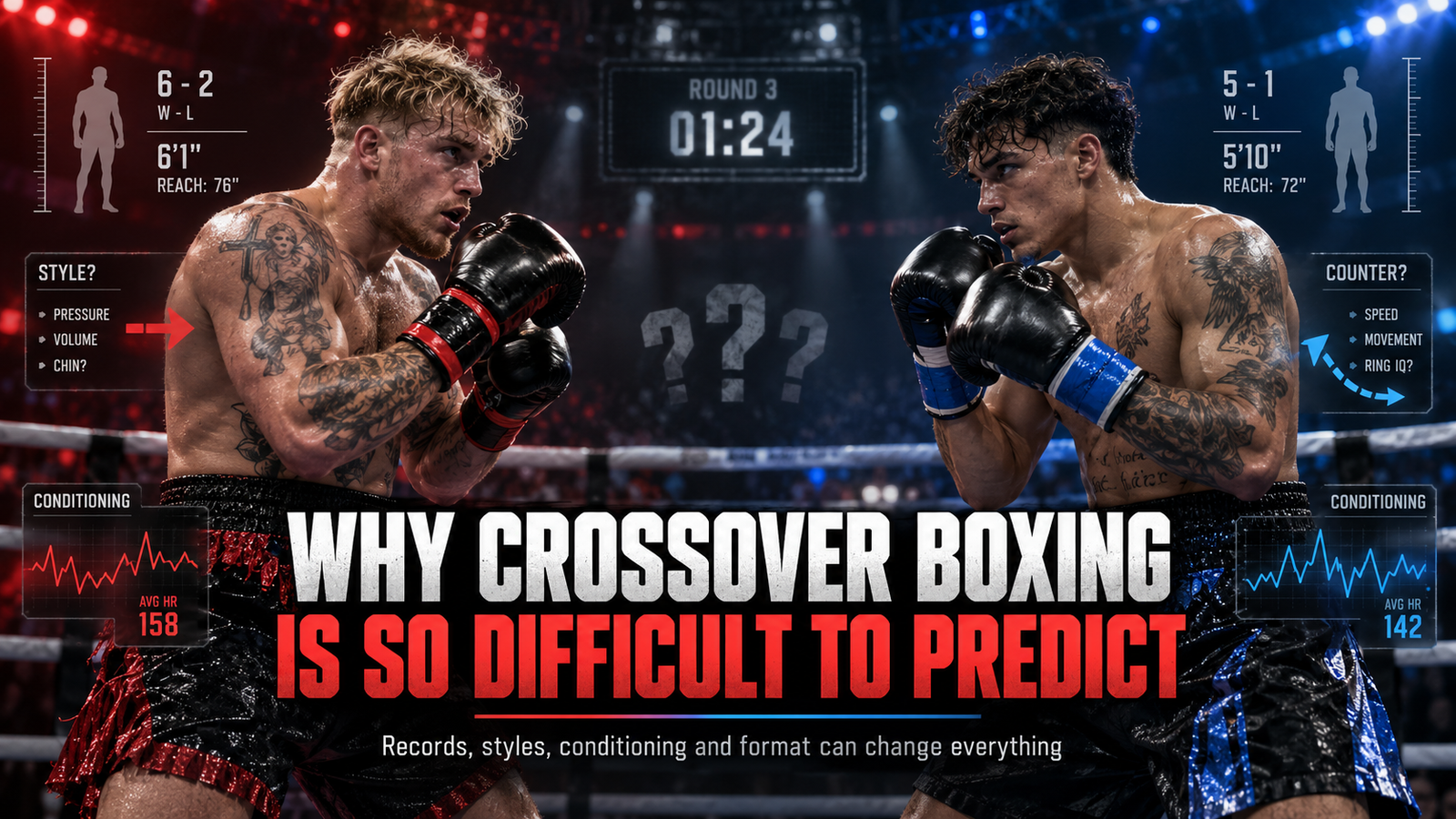
Crossover boxing has created a completely different type of fight analysis. Traditional boxing gives fans years of professional records, established rankings and plenty of footage to study, while an influencer may enter a major event with only a handful of bouts behind them. Fans comparing records, watching previous fights or checking boxing markets through sites such as Oxi bet therefore have to consider much more than the numbers beside each fighter’s name. In crossover boxing, experience, conditioning, style and even the format of the event can dramatically change how a matchup looks once the opening bell rings.
A Short Record Can Be Misleading
The first thing most fans check before a boxing match is the record.
A fighter listed at 5-0 naturally looks more experienced than someone who is 2-2. In conventional professional boxing, even those numbers would provide only limited information. In crossover boxing, they can reveal even less.
The quality of opposition matters enormously.
Five victories against inexperienced opponents may tell us less about a fighter than two difficult bouts against opponents with stronger boxing backgrounds.
Crossover records also frequently contain unusual combinations of professional bouts, exhibitions and fights contested under different rules.
That makes context essential.
The record remains useful, but it should be treated as the beginning of the analysis rather than the conclusion.
Previous Athletic Experience Matters
Not every crossover boxer starts from the same point.
One fighter might arrive directly from YouTube or another entertainment background with little competitive sports experience. Another may have spent years in football, MMA, wrestling or another physically demanding sport.
That does not automatically make someone a better boxer.
It can, however, influence conditioning, coordination, reactions and comfort under competitive pressure.
Combat sports experience is particularly relevant because fighters who have previously competed in MMA, kickboxing or similar disciplines already understand certain aspects of distance, timing and physical contact.
The challenge is identifying which skills actually transfer effectively to boxing.
Training Time Can Change a Fighter Quickly
Crossover boxing is still relatively young, which means some participants improve considerably between appearances.
A fighter’s performance from a year ago may not accurately represent their current ability if they have spent that period training consistently with an experienced boxing team.
This makes recent footage particularly important.
Fans can look for changes in stance, footwork, defensive positioning and punch selection.
Does the fighter remain balanced after throwing combinations? Do they bring their hands back into defensive position? Can they move without crossing their feet? Are they becoming more patient instead of rushing every exchange?
These details can reveal development that a simple win-loss record cannot show.
Conditioning Can Change Everything
Boxing fitness is different from general fitness.
Someone can look extremely athletic and still struggle after several rounds because punching, defending and moving under pressure require a specific type of conditioning.
Fatigue then affects almost everything.
Hands begin to drop. Footwork becomes slower. Reactions deteriorate. Fighters start throwing single punches instead of combinations, while defensive mistakes become more common.
This makes previous performances over longer distances particularly useful.
A fighter who looks explosive in the opening round may become much less effective if the opponent survives the early pressure.
When evaluating a matchup, asking what happens in the later rounds can therefore be just as important as asking who starts faster.
Styles Can Override the Record
Boxing has always been highly dependent on styles.
A pressure fighter may look excellent against opponents who struggle when forced backward but encounter problems against someone comfortable counterpunching.
A taller boxer may control distance effectively against shorter opponents until meeting someone skilled at closing that distance.
Southpaw and orthodox matchups introduce different angles again.
These relationships make direct comparisons difficult.
If Fighter A defeated Fighter B and Fighter B defeated Fighter C, it does not automatically follow that Fighter A should comfortably defeat Fighter C.
Each matchup creates its own tactical problems.
That principle becomes particularly important in crossover boxing, where fighters are still developing their styles and may have obvious strengths and weaknesses.
Size Needs More Context Than the Weigh-In
Weight is important, but it is not the only physical measurement worth considering.
Height and reach can influence how a fight develops, particularly when one boxer wants to work behind a jab from distance.
Even then, measurements do not tell the entire story.
Having a reach advantage is useful only if the fighter knows how to use it. A shorter opponent with better footwork may consistently close the distance and prevent the taller boxer from establishing a comfortable rhythm.
Natural size can matter as well.
Two fighters might weigh almost the same on the official scale while having very different frames or histories competing at that weight.
This is why the weigh-in provides useful information without necessarily explaining the matchup.
Event Format Can Affect the Fight
Crossover boxing events do not always follow identical formats.
The number of rounds, length of each round, glove size, weight agreement and whether a contest is classified as professional or exhibition can all vary.
Those differences can affect tactics.
A fighter with excellent conditioning may benefit from a longer contest because there is more time for fitness to become a factor. A powerful but less experienced fighter might prefer fewer rounds, where early aggression carries greater importance.
Fans should therefore check the actual rules before comparing a new fight with previous performances.
A fighter competing under one format may look noticeably different under another.
Reliable Records Still Matter
With so many different promotions and formats involved, accurate records are particularly important.
Organizations such as BoxRec have long provided records and bout information for professional boxing, giving fans a reference point when researching traditional fighters.
For crossover boxing, dedicated record keeping has become increasingly valuable for the same reason.
Without reliable information about previous opponents, results and event formats, it becomes difficult to evaluate how much experience a fighter genuinely has.
Official rules also provide useful context. USA Boxing publishes resources covering boxing rules, competition and athlete development, helping illustrate just how structured the technical side of the sport becomes beyond what viewers see during a fight.
Social Media Hype Is Not Fight Data
Crossover boxing is unique because promotion and competition are closely connected.
Many fighters already have large audiences before they ever put on gloves.
Training clips can therefore receive millions of views and significantly influence how fans perceive an upcoming matchup.
But short clips have obvious limitations.
A perfectly edited combination on the pads does not show how someone reacts after being hit. Heavy-bag footage cannot demonstrate defensive awareness. A short sparring clip may have been selected specifically because it makes the fighter look good.
Social media is useful for following preparation, but it should not be treated like complete fight footage.
Uncertainty Is Part of the Appeal
Crossover boxing is difficult to analyse precisely because there is often less information available.
Traditional elite boxers may have dozens of professional bouts and extensive amateur backgrounds. Crossover fighters can enter important events while they are still learning fundamental parts of the sport.
That uncertainty creates unusual matchups and makes improvement between fights more significant.
Records, physical measurements and previous performances all provide useful clues, but none should be viewed in isolation.
The best way to understand a crossover fight is to combine them: examine the opposition, watch recent footage, consider styles, check the rules and think about how each fighter has developed.
Even then, boxing has a way of producing surprises once the bell rings.