How poker performance data helps analyse consistency, strategy and competitive development
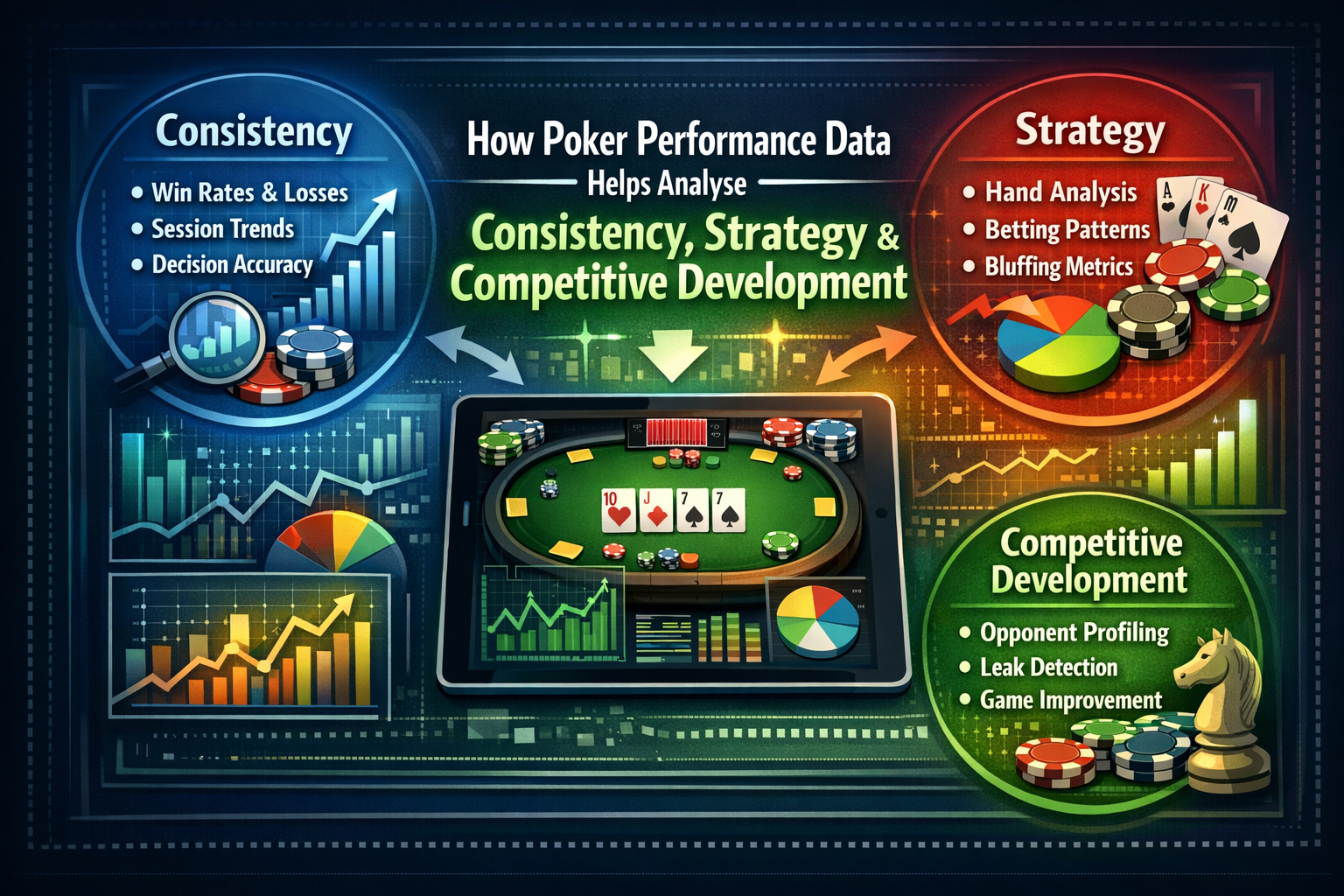
The importance of performance data in modern poker cannot be overstated. Whether you play poker online or in live settings, tracking and analysing your results has become an essential part of understanding and improving your game. Poker players today use advanced tracking tools and databases to monitor trends, learn from previous hands, and measure how consistently they make the right decisions. On professional platforms and communities, data-driven analysis goes hand in hand with skill development, making the game ever more competitive. In this article, we will explore how performance data not only supports individual growth but also shapes the strategies and consistency of seasoned players. For those new to the world of poker, leveraging data is quickly becoming the standard way to progress in the game.
Consistency in poker through data tracking
Consistency is one of the hallmarks of successful poker players. Tracking performance data over thousands of hands enables not only pros but also enthusiasts to observe trends in their gameplay. This data can reveal whether a player’s good results are due to skill or simply a run of luck. By reviewing metrics such as win rates, positional statistics, and showdown frequencies, players can spot sequences where they might be deviating from optimal play. Regular and accurate data tracking uncovers volatility in decision-making, helping players identify and correct patterns that lead to losing sessions.
Another benefit of collecting long-term poker performance data is the ability to assess the effectiveness of adjustments over time. For instance, implementing a new betting strategy or changing opening hand ranges can be measured by comparing recent sessions to older ones. Reliable metrics allow players to determine if tweaks in strategy lead to improved consistency or merely short-term successes. In turn, the discipline required for regular analysis encourages players to be mindful of their performance on a session-by-session basis, promoting sustainable improvements in their game.
Informed strategic adjustments using performance data
Poker is a game of incomplete information, but data analysis allows players to fill in many of the blanks. Reviewing a comprehensive set of hand histories supports the identification of profitable spots and recurring mistakes. For example, strategically inclined players will analyse hands played from different table positions, scrutinise bet sizing tendencies and observe how often their bluffs succeed or get called. Patterns become visible through detailed results tracking, informing their next tactical moves.
Performance data also facilitates more nuanced adjustments against particular player types or field tendencies. If a database analysis shows that a player’s continuation bets are excessively high, this could indicate an exploitable pattern. Adjustments based on such findings are iterative: players fine-tune strategies, return to the data, and repeat the cycle for continuous improvement. Over time, this approach leads to a more robust understanding of both their own strengths and weaknesses and those of their opponents, supporting the ongoing evolution of effective gameplay strategies.
Competitive development and benchmarking
Beyond individual growth, poker performance data also helps competitors benchmark themselves against peers. Tournament players, for instance, often measure their progress by comparing key statistics, such as average placement, in-the-money finishes, and final table appearances, to the performance of top players in their field. This sort of benchmarking is valuable not only for motivation but also for setting realistic development goals. It also assists in assessing whether one’s skillset aligns with the broader competitive landscape or where further work is needed.
For the broader poker community, performance data contributes to a culture of transparency and learning. Communities and study groups often share anonymised statistics to facilitate peer review, collaborative analysis, and healthy competition. The discussion of performance metrics can elevate the overall skill level within those groups, as members learn to spot leaks and strengths not only in their own games but also in others’. As more players adopt data-driven approaches, the collective understanding of the game deepens, fostering an ever more challenging and rewarding competitive environment.